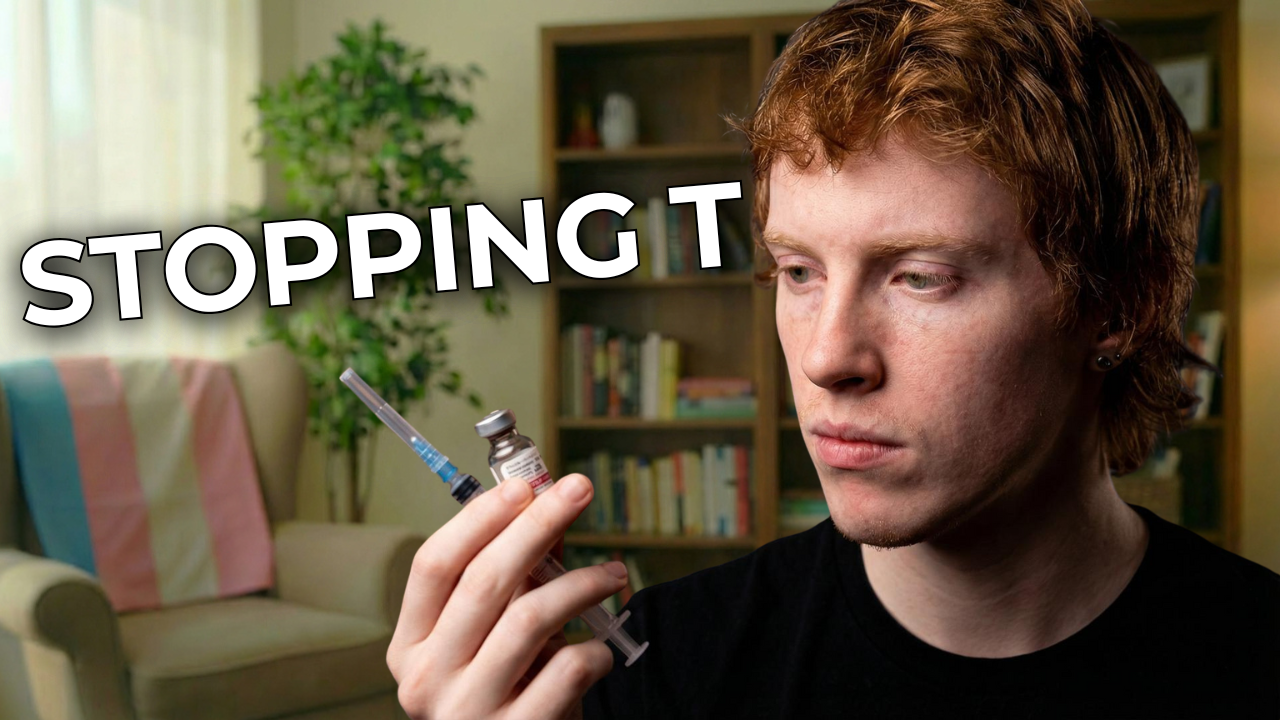
To give my wife the family she dreamed of, I had to stop being the man I’d worked so hard to become. I made the choice to go off testosterone so I could get pregnant and carry our child. But this wasn’t just hitting pause on my medical transition; it was throwing it into reverse. This is the story of the intense gender dysphoria and emotional whiplash that came with putting my identity on hold to start our family. And honestly? It was the hardest thing I’ve ever done. “Trans man stops HRT” would people think I’mm detransitioning.
The “Before” – Finding Home in My Own Skin
Before this chapter, my journey was about finding myself. For years, I felt like a stranger in my own body—a constant, low-grade hum of wrongness. When I finally realized I was a man, it was like a light flipping on in a pitch-black room. Starting testosterone was the next step, and it was life-changing. For the first time, the person in the mirror started to match the man I knew I was. My voice dropped, my jawline sharpened, and the soft curves I hated began to shift. It was more than physical; it was a deep, soul-level peace. The static of gender dysphoria that had been the background noise of my life finally went quiet. I had built a home in my own skin. I was confident, happy, and finally me. And had a wife who loved me for the man I was. Life was good. And then, a new dream emerged—one that started with my wife.
Trans Man Stops HRT – A Collision of Dreams
My wife had a deep desire for biological children, and as we discussed our future, it became clear that I was the one who could make that happen. The choice was suddenly right in front of me: to get pregnant, I would have to stop taking testosterone. It’s a medical non-negotiable due to the risks to a fetus. The very medicine that made me feel like myself would have to be sacrificed. It felt like an impossible trade-off. How could I willingly walk back into the dysphoria that had caused me so much pain? Researching other trans men’s pregnancies terrified me with stories of emotional turmoil and misgendering. The thought of my body feminizing again made me sick. A key part of our plan was that I could stay home during the pregnancy, limiting the social interactions that could lead to being misgendered. After countless conversations and tears, my love for my wife won. I agreed to put my transition on hold to build our family. I just had no idea how much it would unravel me.
The Process – The Unraveling
The day I skipped my first T shot, a wave of dread washed over me. For a few weeks, nothing happened. I told myself it would be okay. But then the changes began. First came a bone-deep exhaustion that sleep couldn’t touch, followed by intense mood swings. Then, the physical reversal started. My body odor changed, losing its muskiness for a scent from my past. My skin softened. The mirror showed me a stranger I thought I’d left behind for good. The worst part was my period returning. For many trans men, this is a major source of distress; for me, it was a monthly, bloody reminder that my body wasn’t my own. It felt like a betrayal. This was a full-blown relapse into intense gender dysphoria. Every change screamed that I was losing the man I’d become. The nine months we spent trying to conceive felt like an eternity, living in painful limbo as my reflection became more alien.
The Pregnancy – A Body in Conflict
After nine long months, we finally got a positive pregnancy test. The joy was immediate, but a new wave of fear followed. The physical changes were about to accelerate, and the dysphoria would get more complicated. Navigating healthcare as a pregnant man was a challenge. The system is built for women. Even with understanding doctors, the OBGYN office was a minefield of waiting rooms full of cisgender women and forms with no box for my identity. As my belly grew, so did my internal battle. My chest, which I’d had top surgery on, began to swell slightly, triggering my worst dysphoria. Seeing my pregnant body in the mirror was often brutal. My hips widened, my shape undeniably pregnant. It created a bizarre disconnect: the world saw a pregnant person and read “woman,” while I fought every day to hold onto my identity as a man. Some days, the dysphoria was so bad I could barely look at myself.
The Birth – The Climax of the Journey
When I went into labor, I was a mix of nerves and excitement. My pronouns and my gender were listed as a transgender man in my chart, but I was still bracing myself. Soon after we got to the room, a nurse misgendered me. But before I could even react, another nurse corrected her and apologized. She was amazing, and that simple act made me feel safe. The birth was intense, powerful, and ultimately, empowering. I wasn’t a case study; I was just a person having a baby. And then, my son, Emrie, was born. They placed him on my chest, and in an instant, all the noise, the pain, the dysphoria of the past year and a half just vanished. Looking at his tiny face, I was hit with a love so fierce it took my breath away. The struggle, the sacrifice—it all made sense. It was all for him. In that moment, I wasn’t a trans man who had stopped hormones. I was just a dad. His dad. And it was the most right I have ever felt in my life.
After Pregnancy – Restarting HRT
Starting testosterone again after my son was born felt like coming home, a slow return to the man I recognize in the mirror. But I’m not the same man I was. This experience reshaped me. My identity has expanded to include a new title: Dad. This path isn’t for every trans person who wants a family. It was a journey through intense emotional pain, but it led me to the greatest joy of my life. It shows that families are built in so many different ways, and our paths to parenthood are all unique. My experience was isolating, but it highlights how crucial a supportive community and doctors can be. The entire journey was worth every hard moment. My son is my world, and I would do it all again for him in a heartbeat. Thank you for listening. If you’re on a similar path or just want to follow my journey as a dad, I share more on my channel and socials. Please know you aren’t alone, and your story matters.